Wire
I love wire. Wire is one of the Modular Electronics.
List
- https://www.youtube.com/watch?v=kRLDkvlm4iw - Epoxy potting a soldered auto connector. The video is mostly talking head but there is a demonstration of soldering / potting the connector. This video goes with the Race Spec PDF below.
- https://openwrt.org/docs/techref/hardware/port.jtag.cable.unbuffered - Reportedly, The simplest type of JTAG cable.
- https://openwrt.org/docs/techref/hardware/port.jtag.cables - More JTAG info.
Thermocouples
- https://www.geocorpinc.com/ These folks have a business about thermocouples. The website might be a useful resource to look into. There is a thermocouple builder page, which gives graphics (of connectors) and that is well done. I made a video of the connectors to save you the time of going to their website (and in case they remove the wizard from the website). Note the smaller size of the mini connector, as well as the red colouring for the high temp version.
Theory
Bandwidth as a function of Distance, Frequency and Signal to Noise ratio (SNR)
Per Sybex' Cabling by Barnett, Groth, and McCree (3rd Edition is what I have from the Used Book store, and it appears to be the newest) (page: 38)
Given a fixed bandwidth:
- If you increase distance, you must lower frequency or increase SNR
- If you increase frequency, you must lower distance or increase SNR
- If you increase SNR, you can increase frequency or distance
How Fast Can 100M UTP Go?

I see Cat 6A going to 10GBASE-T (reference: https://en.wikipedia.org/wiki/Category_6_cable#Category_6A)
Cat 7 is not EIA/TIA approved (reference: https://en.wikipedia.org/wiki/ISO/IEC_11801#Category_7), and Cat 8 is not 100M (reference: https://en.wikipedia.org/wiki/ISO/IEC_11801#Category_8 links checked 2025-05-04).
Sources online indicate that CAT5E can go to 2.5G or even 5G with short runs (https://www.otscable.com/cat5e-speed/) So short runs of CAT6 can probably go higher than 10G. It would be expected that speeds would be an arch with dropoff over distance and not a sudden stop.
But for CAT7 and CAT8, the standard is 100M. If it's not 100M, it doesn't count.
How Fast Can CAT3 (Phone Cable) Go?
I was able to get 100BASE-T out of a patch panel with CAT3 (4 pair, I think). All those tales of it being only good to 10BASE-T were incorrect, were a lie (this makes some assumptions about the cable being of decent quality and the runs being reasonably short).
Types of Stranded Wire
There are grades of stranded wire, which refer to the coarse or fineness of the strands.
https://en.wikipedia.org/wiki/IEC_60228
https://www.eaton.com/content/dam/eaton/products/low-voltage-power-distribution-controls-systems/swiching-devices/resources/finestrandwire-il008004en.pdf
Tips/Techniques
Buy in Bulk
You will save a lot of money.
Look for Local Surplus of Wire
I found 2000 feet of 22 gauge wire for $15 2024 prices from a local electronics recycler. Wire is one of those things that the wire factories can't stop breeding producing, so there is always a lot around.
Wire Wrap
Not a lot of modern use of wire wrap, but the small gauge wire and the cutters are useful. Pretty much if you build a board with wire wrap, murphy will disconnect/cause oxidation on three wires and you'll never figure out why the board doesn't work.

https://www.eevblog.com/forum/buysellwanted/lfs-cheap-wire-wrap-tool-and-sockets-(uk)/ https://www.eevblog.com/forum/chat/do-people-not-wire-wrap-anymore/ http://web.archive.org/web/20201027182555/https://jonard.com/sites/default/files/product_files/Data%20Sheet%20-%20Wrap-Strip-Unwrap%20Tool.pdf
Compare speed wire to wire wrap. The former is a lot more reasonable, but you will still need an enclosure otherwise wires will get knocked off over time.
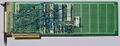
Wire Wrap

Speed Wire


Soldering Wire to a Bolt
Assuming you match the metals correctly: https://www.eevblog.com/forum/projects/how-to-reliably-connect-copper-wire-to-stainless-steel-bolts/msg5446019 Solder lugs are cheap. I bought a few for a Spot Welder I made. Of course, you can also crimp them with a ring connector (which is probably what I would recommend. Though you don't always have high current crimps (i.e. for car batteries) so in that case, you might consider a solder lug). I think also DiodeGoneWild mentioned this in one of his videos, when repairing vintage TE. I forget which one at the moment. The lesson is, you need the right hardware, don't just solder directly to a bolt.

IDC Cable Problems
https://www.eevblog.com/forum/projects/high-reliability-ribbon-cables/msg5449421/ - Digikey made cables error. No one bothered to look up the cable (they kept asking: "who makes it?") until the 2nd page, even though info was provided.
Be Careful with RF Cables
RF Cables can be expensive. And easily broken per Amp hour 533: https://theamphour.com/533-microwave-measurement-with-joel-dunsmore/
Finding a Break in a Cable
A couple of resources.
- Using a TDR to find the break. https://forum.allaboutcircuits.com/threads/using-a-time-domain-reflectometer-tdr-to-find-a-fault.110637/ (I did not read the link, but just want to post something to show there are other results out there. Use the search engine). A writeup on TDRs is in ISBN 0-7506-1601-6, METE by K. Brindley. (There is a TDR tester built into ethtool on Unix systems).
- https://theamphour.com/481-an-interview-with-paul-thompson/ - This is the fellow from the amp hour whom builds electric fences. If I remember right, they discuss fault finding in wires (I think he has some custom solution to this). I'm not sure he discusses all details of how he does it, but as a reference, it should be checked.
- https://www.youtube.com/watch?v=FOzEpJogSFg LER / Learn electronics repair. Per hackaday. He uses Capacitance. This is one of those techniques you hear about, but forget if you don't use it. So I'm leaving it here as a reference. In this example, he is comparing it to the capacitance of some other wires, which means you may need multiple conductors for this method to work. The hackaday post has some comments that are worth reading. They say the NanoVNA software can do TDR. https://hackaday.com/2025/02/15/how-to-find-where-a-wire-in-a-cable-is-broken/
- Using a NanoVNA per https://www.eevblog.com/forum/beginners/any-tricks-for-finding-a-break-in-an-underground-wire/ https://groups.io/g/nanovna-users/topic/using_nanovna_to_detect_an/90375131
Spools of 20 AWG Solid BC Polyethylene Wire
I was at the thrift store and found some wire used for the Innotek Electric Dog Fence, possibly. It was a spool of green 20AWG Copper wire, and it lasted me about a year. It was the best wire I've come across, and you can buy more spools of it on the auction site for about $30. However, there is some bit of gaming going on, as the new spool was not as good. I bought another one, this time labeled with Carris Reels, which was the manufacturer of the original spool I had, and that was a bit better, but still not 100%. Anyways, it was good enough. This wire was a joy to use, and I used it for all twist ties in my (mostly) ethernet work. I'm still on the search for the original wire, but that will have to wait as time and budget permits. Maybe it's actually the same. Production quality can differ of course. There are a few different search terms you can use to look for the wire, but start with Innotek Dog Wire, and you will see spools show up. You will also help in tracking visits to my blog to serve the surveillance economy. Kidding, mostly.
I try to reuse all the wire that I 'use' as twist ties. With zip ties, that is not possible. I hate zip ties.
High End Wiring (Race-Spec)
This webpage is about 100 pages exported as a PDF and I made it into a book on one of those online book creation services (I happen to use lulu.com). A lot of advertisements (be forewarned) but easy and light reading. Cables and connectors are tough.

