Difference between revisions of "Fire"
| (4 intermediate revisions by the same user not shown) | |||
| Line 11: | Line 11: | ||
===Predict Where Fire Will Go=== | ===Predict Where Fire Will Go=== | ||
| − | Fire moves | + | Fire moves quick, and it is generally not possible for a human to intervene. Therefore, you must predict where a fire is likely to start, and where it will go, once it starts (before anything occurs). By doing this, you can eliminate or at least minimize domino effects. |
| + | |||
| + | ===Test Products Continuously Over Time=== | ||
| + | It is important to test products. Then to test them again as time goes on. You can not depend that a given brand or product will be the same from batch to batch. | ||
| + | ===Leave Appliances Powered Off When Possible=== | ||
| + | This is the 'turn lights off when you leave a room' philosophy. Any device that runs 24/7 should be looked at critically for fire safety. | ||
==Links== | ==Links== | ||
| + | * https://en.wikipedia.org/wiki/List_of_building_or_structure_fires | ||
| + | * https://www.youtube.com/@USCSB - Many explosions occur from hot work (welding). | ||
==Burn Tests== | ==Burn Tests== | ||
| Line 20: | Line 27: | ||
===Nylon Cable Glands=== | ===Nylon Cable Glands=== | ||
| − | These were reasonably self extinguishing. They did not burn well. | + | These particular cable glands were reasonably self extinguishing. They did not burn well. |
<gallery> | <gallery> | ||
File:Cable gland box.jpg | The cable glands in question. | File:Cable gland box.jpg | The cable glands in question. | ||
Latest revision as of 14:58, 19 June 2026
Fire safety is fundamental to any electrical or electronic assembly.
Theory
There is a lot to say here. I will just include some things that stand out to me.
Generally, electronic devices should be in metal boxes. From the Amp Hours episode 357-an-interview-with-rick-altherr Your server hardware product is not truly shipped until it has caught fire at a datacenter. I.e. it is possible for computers and servers to start on fire. Appliances can also start on fire, such as refrigerators: https://en.wikipedia.org/wiki/Grenfell_Tower_fire#Refrigerator
It is possible to design for hazardous environments where you don't want any part of the circuit able to get hot enough to combust flammable powders or gas. e.g. See Amp Hour 635-low-power-connected-devices-with-andrea-longobardi.
Therefore, all design of electronic and electrical work must take fire into consideration. It is important to design devices for fire safety. It is also important to design placement and location of devices for fire safety.
Predict Where Fire Will Go
Fire moves quick, and it is generally not possible for a human to intervene. Therefore, you must predict where a fire is likely to start, and where it will go, once it starts (before anything occurs). By doing this, you can eliminate or at least minimize domino effects.
Test Products Continuously Over Time
It is important to test products. Then to test them again as time goes on. You can not depend that a given brand or product will be the same from batch to batch.
Leave Appliances Powered Off When Possible
This is the 'turn lights off when you leave a room' philosophy. Any device that runs 24/7 should be looked at critically for fire safety.
Links
- https://en.wikipedia.org/wiki/List_of_building_or_structure_fires
- https://www.youtube.com/@USCSB - Many explosions occur from hot work (welding).
Burn Tests
Ethernet Cable
Tests coming soon.
Nylon Cable Glands
These particular cable glands were reasonably self extinguishing. They did not burn well.
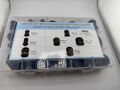
The cable glands in question.
Cable gland burn test.

PLA
Tests coming soon.

